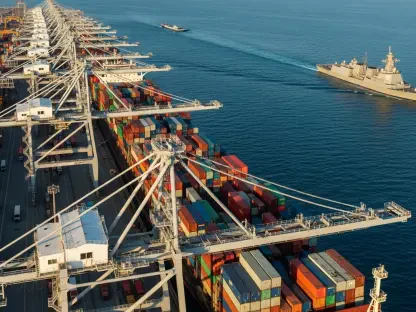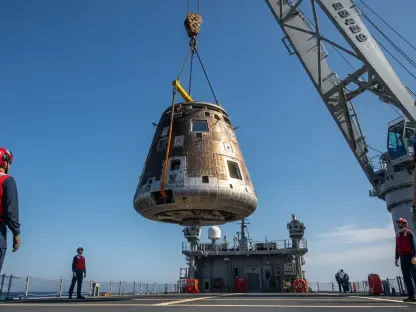

The consolidation of AI in productive environments has moved beyond experimentation and is now actively reshaping the operational core of industrial enterprises. AI is increasingly embedded in real-world systems across manufacturing, energy, and logistics. In fact, two-thirds of industrial organizations have already deployed AI in live operational environments, signaling a clear shift from testing to execution. This evolution reframes competitive advantage: success is no longer defined solely by algorithmic sophistication, but by the strength of underlying infrastructure, particularly network readiness, cybersecurity, and the synchronization between IT and OT teams. As AI becomes physically integrated into connected assets and workflows, the ability to support real-time, edge-driven workloads and secure distributed systems is emerging as the decisive factor in enabling autonomous, high-speed decision-making across industrial ecosystems.
Implementation Strategies and Resilience in Critical Infrastructure
The operational maturity achieved in the industrial sector during this cycle demonstrates that AI has moved beyond the proof-of-concept phase and has become a structural component of corporate profitability. Today, a significant portion of organizations already manages large-scale deployments that directly impact semiconductor manufacturing and utility services management through tangible and measurable applications. Among the most relevant areas is process automation, used by the vast majority of advanced enterprises to ensure consistent operational performance under varying conditions and to reduce the margin for human error. Likewise, automated quality inspection through machine vision systems has become an industry standard, enabling defect detection in milliseconds, a capability that is technically unattainable through traditional human supervision on high-speed production lines. Supply chain optimization has also gained renewed prominence, as advanced adopters rely on predictive algorithms to equip their logistics with superior resilience against global market fluctuations and disruptions to international trade routes. This industrial intelligence is distinguished from traditional corporate or generative models by its critical need to interact securely with the physical world, where reliability is not an aesthetic option but a fundamental requirement for maintaining asset integrity and worker safety.
Why Connectivity and Edge Compute Decide AI Success
Existing network infrastructure is operating at the limits of its technical capacity in the face of demand from new, massive data-processing models. Nearly all industrial executives acknowledge that AI workloads have radically transformed connectivity requirements, demanding performance specifically designed to process data in motion with minimal latency. To scale these solutions successfully, organizations have identified high-reliability connectivity and edge computing capacity as the most essential technical enablers for avoiding costly interruptions in critical autonomous systems. Data processing must necessarily occur close to sensors and high-resolution cameras to minimize response time in advanced robotics decisions, driving massive investment in proximity hardware that reduces dependence on centralized cloud infrastructure. Nevertheless, a concerning technical gap persists between companies that keep their information technology and operational technology teams separate and those that have opted for close, unified collaboration, with the latter reporting significantly higher levels of wireless instability. The industrial network has ceased to be a simple communications backbone and has become the critical infrastructure sustaining real-time machine learning, demanding constant modernization to handle the massive flow of information generated by next-generation sensors.
Scaling Innovation Without Expanding Risk
Cybersecurity presents a fundamental paradox in the contemporary industrial environment, serving simultaneously as the greatest obstacle to technological adoption and as its primary expected benefit. As plants connect thousands of new devices to feed their analytics models, the attack surface grows exponentially, making it imperative to integrate security as a foundational component from the initial design of each operational project, not as a post-hoc patch. It is telling that concern over digital risks increases in proportion to technological maturity, indicating the awareness necessary to build real resilience against sophisticated threats that aim to compromise production continuity. In parallel, there is unprecedented economic pressure from executive committees demanding tangible financial results within compressed timelines to justify capital investments in AI. This urgency explains the concentration of resources in areas with immediate success metrics, such as direct productivity improvement and operational cost optimization through advanced predictive maintenance. The ultimate objective of these investments transcends the simple optimization of routine tasks and evolves toward a model of autonomous machine-to-machine decision-making in which the infrastructure is capable of self-regulating without constant human intervention.
Breaking IT/OT Silos to Unlock Industrial AI
The success of digital transformation in this environment depends on the sophistication of algorithms or the power of the latest-generation hardware, and on the ability of organizations to address the human challenge posed by the convergence of traditionally siloed departments. The lack of alignment between data security specialists and those responsible for physical production remains one of the greatest impediments to scaling AI on the modern manufacturing floor. This operational fragmentation generates crises of trust and technical inconsistency that delay the deployment of new capabilities, leaving many industrial assets outside corporate security protocols and creating dangerous blind spots for the organization. Companies that have achieved full integration between these areas report a greater capacity to scale their solutions and a drastic reduction in the instability of their communication systems, translating directly into competitive advantage. In a market where speed of response is a differentiating factor, shared network ownership and unified governance have become indispensable requirements for guaranteeing process repeatability and the effective protection of intellectual property. The transition toward a truly intelligent industry requires a profound shift in organizational culture, one that prioritizes data transparency and cross-disciplinary collaboration as the true foundations of the new autonomous industrial economy.
Strategic Imperatives for Leadership in the Autonomous Market
The strategic decisions made during this period cemented AI’s role as the definitive engine of modern industrial efficiency. Priority was given to modernizing physical infrastructure to support edge processing, while deep integration between technology and operations teams enabled effective mitigation of cybersecurity risks. The success of these initiatives demonstrated that operational resilience depended on both algorithmic power and the network’s capacity to act autonomously and securely in complex physical environments, establishing a new global standard of competitiveness.